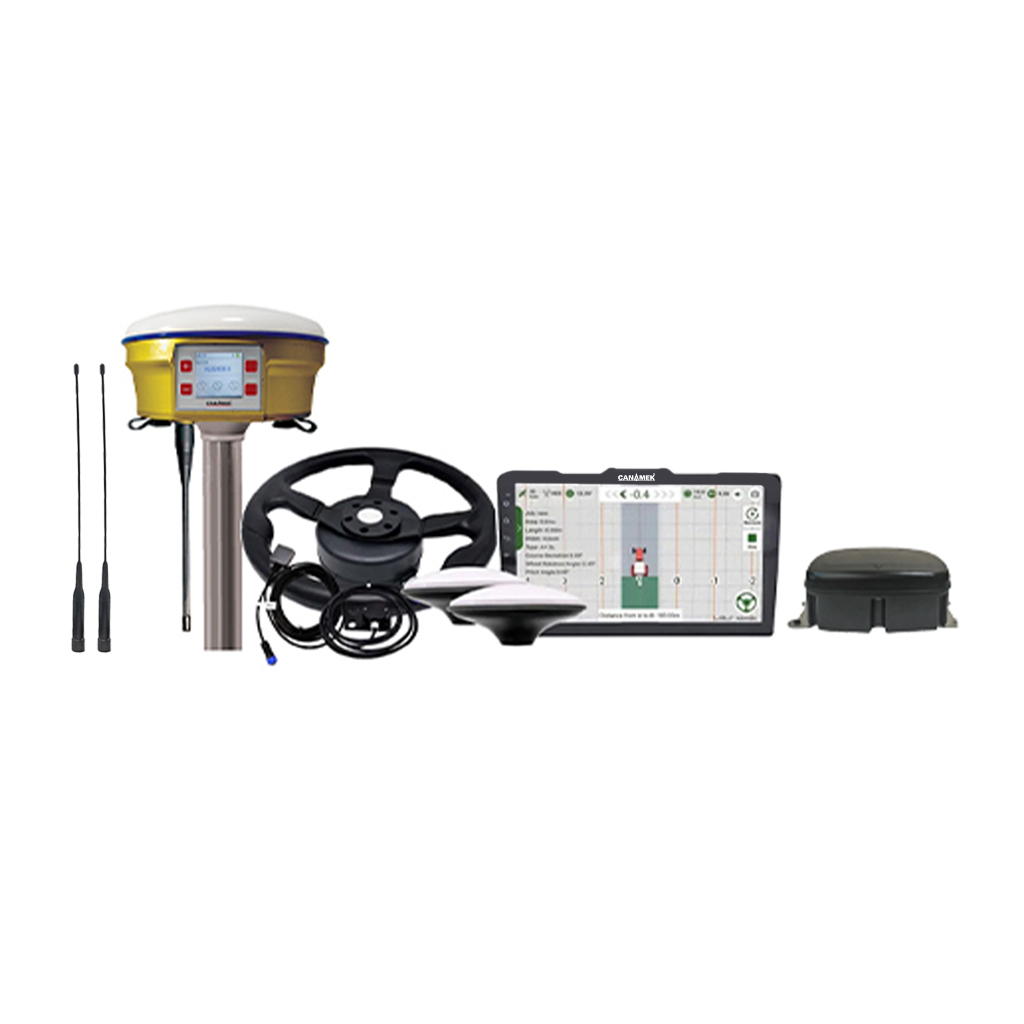

Precision Agriculture
Agricultural Mechanization | Benefits, Challenges, and Solutions
Agricultural Mechanization | Benefits, Challenges, and Solutions
Today, the importance of agricultural mechanization is widely recognized. In the past, farmers relied mainly on human labor and animals to perform agricultural activities. This traditional approach involved many difficulties, including long and physically demanding work for land preparation, seed planting, crop management, livestock care, and harvesting.
However, during the 20th century, the agricultural industry underwent significant changes. Today, mechanization has become one of the fundamental components of modern agriculture around the world.
What Is Agricultural Mechanization?
Agricultural mechanization refers to the use of machinery and powered equipment in agricultural processes to perform tasks that were traditionally carried out by human or animal labor. These machines are used at different stages of agricultural production, from land preparation and planting to irrigation, crop management, harvesting, and even post-harvest processing.
Mechanization helps farmers perform agricultural operations with greater speed, accuracy, and efficiency. By using mechanized equipment, farmers can make better use of land and natural resources such as water and soil while reducing production costs.
Modern agricultural machinery can also improve the quality of farming operations and make it possible to cultivate larger areas and manage land with more challenging conditions. In addition, modern technologies can help farmers respond more effectively to challenges such as labor shortages, drought, and changing environmental conditions.
Benefits of Agricultural Mechanization
Agricultural mechanization offers numerous benefits that can improve productivity, quality, and profitability in farming. The most important benefits include:
Improving Agricultural Techniques
Mechanization contributes to the development of agricultural practices, reduces time-consuming operations, and improves accuracy in farm activities. Farmers can use advanced equipment for land preparation, leveling, planting, weed control, fertilization, spraying, and harvesting.
Modern technologies also allow many agricultural operations to be performed more accurately. For example, advanced irrigation systems can deliver water more efficiently to crops, while smart equipment provides better control over farming activities.
Promoting Commercial Agriculture
Agricultural mechanization is an important factor in the development of commercial farming. The use of machinery allows farmers to manage larger areas of land in less time and increase production capacity.
This is particularly important for large farms because performing many agricultural operations manually can be time-consuming and expensive. Agricultural machinery enables faster operations and more efficient management of large areas.
Increasing Farmers' Income
One of the most important benefits of agricultural mechanization is its potential to increase farmers' income. Mechanization can contribute to higher income in several ways.
Reducing the time required for agricultural operations can lower labor costs.
More accurate farming operations can contribute to higher crop yields and improved quality.
Farmers can manage larger areas of land more efficiently.
Delays in important agricultural operations can be reduced.
Better use of inputs such as seeds, water, fertilizers, and fuel can help control production costs.
Reducing Labor Shortages
One of the major challenges facing agriculture is the shortage of skilled agricultural workers and the migration of rural populations to urban areas.
Mechanization can help address this problem. Agricultural machines can perform many tasks that traditionally require significant amounts of human labor in a shorter period of time.
As a result, farmers can manage larger areas with fewer workers. At the same time, machinery can reduce the physical burden associated with demanding agricultural tasks.
Maximizing Crop Production
Mechanization can improve the productivity of agricultural land. Modern machinery allows agricultural operations to be performed faster and more accurately, enabling farmers to make better use of their land.
The use of precision equipment for planting, fertilization, spraying, and harvesting can also reduce resource waste and create better conditions for increasing crop yields.
Timely Agricultural Operations
Timing is extremely important in agriculture. Delays in activities such as land preparation, planting, spraying, irrigation, and harvesting can negatively affect crop performance.
One of the major benefits of mechanization is that agricultural operations can be completed more quickly and within the appropriate time frame.
Land leveling is an important application of agricultural mechanization. In the past, land leveling was often performed using traditional methods that were time-consuming and had limited accuracy. Today, modern technologies such as satellite-based and laser land leveling systems allow agricultural fields to be leveled with much greater speed and accuracy.
The use of advanced equipment together with tractors, bulldozers, and other agricultural machinery can significantly improve the efficiency of land preparation and leveling operations.
Reducing Health Risks
Traditional agricultural activities can involve various physical risks. Long hours of manual work, handling heavy loads, digging, using cutting tools, and exposure to certain agricultural chemicals and pests can negatively affect the health of workers.
Mechanization can reduce the need for many physically demanding and repetitive tasks and therefore reduce physical stress on farmers and agricultural workers.
Promoting Workforce Specialization
As agricultural mechanization develops, the need for skilled workers who can operate modern machinery and technologies increases.
Workers and farmers can develop specialized skills in areas such as tractor operation, automatic steering systems, planting equipment, harvesting machinery, precision agriculture technologies, and farm management systems.
Encouraging Cooperation Between Farmers
Mechanization can create opportunities for greater cooperation between farmers. For example, farmers can jointly purchase and use expensive machinery or obtain mechanized agricultural services from specialized contractors.
This approach can be particularly useful for small-scale farmers who may not have sufficient financial resources to purchase advanced machinery independently.
Improving Crop Quality
More accurate agricultural operations can contribute to better crop quality. Uniform planting, proper irrigation, precise fertilization, effective pest management, and timely harvesting can all play an important role in improving the final quality of agricultural products.
Making Labor Available for Other Sectors
By reducing the need for human labor in physically demanding and repetitive agricultural activities, mechanization can free workers to participate in other economic sectors.
This can be particularly important in regions where agriculture faces labor shortages and where the workforce can be redirected toward other productive activities.
Reducing Dependence on Animals
With the mechanization of agriculture, farmers become less dependent on animals for activities such as plowing, transportation, and land preparation.
As a result, the time and cost required to maintain and feed working animals can be reduced. In addition, less land may be needed to produce animal feed, potentially allowing more agricultural land to be used for food production.
Disadvantages of Agricultural Mechanization
Despite its many advantages, agricultural mechanization also has certain disadvantages and limitations.
High Initial Cost of Machinery
Modern agricultural machinery, particularly advanced and precision equipment, can require significant initial investment. This can be a major obstacle for small-scale farmers.
Maintenance and Repair Costs
Agricultural machinery requires regular servicing, maintenance, and repairs to operate efficiently. The cost of spare parts, fuel, maintenance, and technical services can increase the operating expenses of a farm.
Reduction in Traditional Agricultural Employment
Mechanization reduces the need for human labor in some agricultural activities. If mechanization is introduced without proper workforce training and the creation of alternative employment opportunities, it may reduce traditional agricultural jobs in some areas.
Fuel and Energy Consumption
Many agricultural machines rely on fossil fuels. Fuel consumption can increase production costs and, when poorly managed, may contribute to air pollution and greenhouse gas emissions.
Potential Soil Compaction
Repeated movement of heavy agricultural machinery across fields can cause soil compaction. Excessive compaction can reduce water and air infiltration and create unfavorable conditions for root growth.
Proper machinery traffic management and the use of appropriate equipment can help minimize this problem.
Need for Skilled Operators
Modern agricultural machinery and smart equipment require trained operators. A lack of skilled personnel can reduce equipment efficiency and may increase the risk of damage to machinery or agricultural land.
Dependence on Technology and Spare Parts
As farms adopt more advanced technologies, their dependence on software, electronic components, spare parts, and technical support also increases.
If technical services or replacement parts are not readily available, machinery failure can interrupt important agricultural operations.
Challenges of Agricultural Mechanization
The development of agricultural mechanization involves several challenges that should be considered before investing in machinery and technologies.
One of the most important challenges is the high initial cost of agricultural equipment. Small and fragmented fields can also make the use of large machinery difficult in some regions.
Other challenges include inadequate repair and maintenance infrastructure, a shortage of skilled operators, limited access to spare parts, and insufficient technical support.
Machinery selection must also be based on factors such as crop type, climate, field size, soil conditions, and the specific agricultural operation. Using inappropriate machinery can increase costs and may even damage the soil or crops.
Another major challenge is integrating traditional agricultural mechanization with modern technologies. New systems such as GNSS, RTK, automatic steering, smart controllers, sensors, and precision land leveling technologies are increasingly being introduced into agriculture.
Effective use of these technologies requires appropriate infrastructure, technical support, and operator training.
Ways to Improve Agriculture Through Mechanization
Several strategies can help improve agricultural productivity through effective mechanization.
Selecting machinery that matches the type of soil, crop, and agricultural operation
Providing proper training for machine operators and agricultural workers
Using precision and smart agricultural equipment
Performing regular maintenance and servicing of machinery
Sharing agricultural machinery among several farmers
Using mechanized agricultural contractors to reduce initial investment costs
Using GNSS and RTK technologies to improve operational accuracy
Using automatic steering systems to reduce human error and overlapping operations
Using laser and satellite-based land leveling systems to improve field leveling accuracy
Managing machinery traffic to reduce soil compaction
Using data-driven technologies to improve resource management and agricultural productivity
Agricultural Mechanization and Its Future
Agricultural mechanization is moving from basic mechanical machinery toward intelligent, connected, and automated equipment.
The combination of agricultural machinery with technologies such as GNSS, RTK, Internet of Things, artificial intelligence, sensors, satellite data, and automatic steering systems can create a new generation of farming.
In this new approach, the goal is not simply to increase the number of machines used on farms. Instead, the focus is on using machinery intelligently to increase productivity, reduce costs, improve operational accuracy, and use natural resources more efficiently.
For this reason, smart agricultural mechanization can become one of the main foundations for the development of precision and sustainable agriculture in the coming years.
Rassam GPS
Rassam GPS, Rassam Lian Machine, formerly known as Ranjbaran, operates as a manufacturer and supplier of agricultural automation machinery and as a sales representative for satellite-based and laser land leveling equipment from Canada.
The company provides modern agricultural equipment and solutions designed to support agricultural mechanization, precision farming, and the use of advanced technologies to improve the accuracy and efficiency of agricultural operations.
Frequently Asked Questions About Agricultural Mechanization
What are the benefits of agricultural mechanization?
Agricultural mechanization offers several benefits, including increased productivity, reduced operation time, lower labor requirements, improved accuracy, better crop quality, lower production costs in many operations, and the ability to manage larger areas of farmland.
What are the disadvantages of agricultural mechanization?
The main disadvantages include the high cost of purchasing machinery, maintenance and repair expenses, fuel consumption, the need for skilled operators, potential soil compaction, and dependence on spare parts and technical services.
How does mechanization affect agricultural production?
Mechanization can improve agricultural productivity by increasing the speed and accuracy of different farming operations. Timely land preparation, planting, crop management, and harvesting can contribute to better yields and improved crop quality.
Is agricultural mechanization suitable for small-scale farmers?
Yes. Small-scale farmers can also benefit from mechanization. Shared machinery, equipment rental, and mechanized agricultural services provided by specialized contractors can reduce the need for large initial investments.
What role do modern technologies play in agricultural mechanization?
Technologies such as GNSS, RTK, automatic steering, sensors, satellite data, and precision land leveling systems can improve operational accuracy, reduce resource waste, and help move agricultural mechanization toward smart and precision farming.