
Tutorials
Benefits of Using an Auto Steering System in Agriculture
Modern agriculture is increasingly dependent on smart technologies. Rising production costs, limited water resources, shortage of skilled labor, and the need to improve efficiency have encouraged farmers to adopt advanced equipment and precision machine guidance systems.
One of the most important technologies in Precision Agriculture is the Auto Steering System. By using GNSS and GPS technologies, this system guides tractors and other agricultural machinery with extremely high accuracy.
An auto steering system not only improves operational accuracy but also reduces fuel consumption, lowers production costs, prevents overlapping operations, and increases the quality of agricultural activities. For this reason, it has become an essential technology in mechanized farming and smart agriculture projects.
What Is an Auto Steering System?
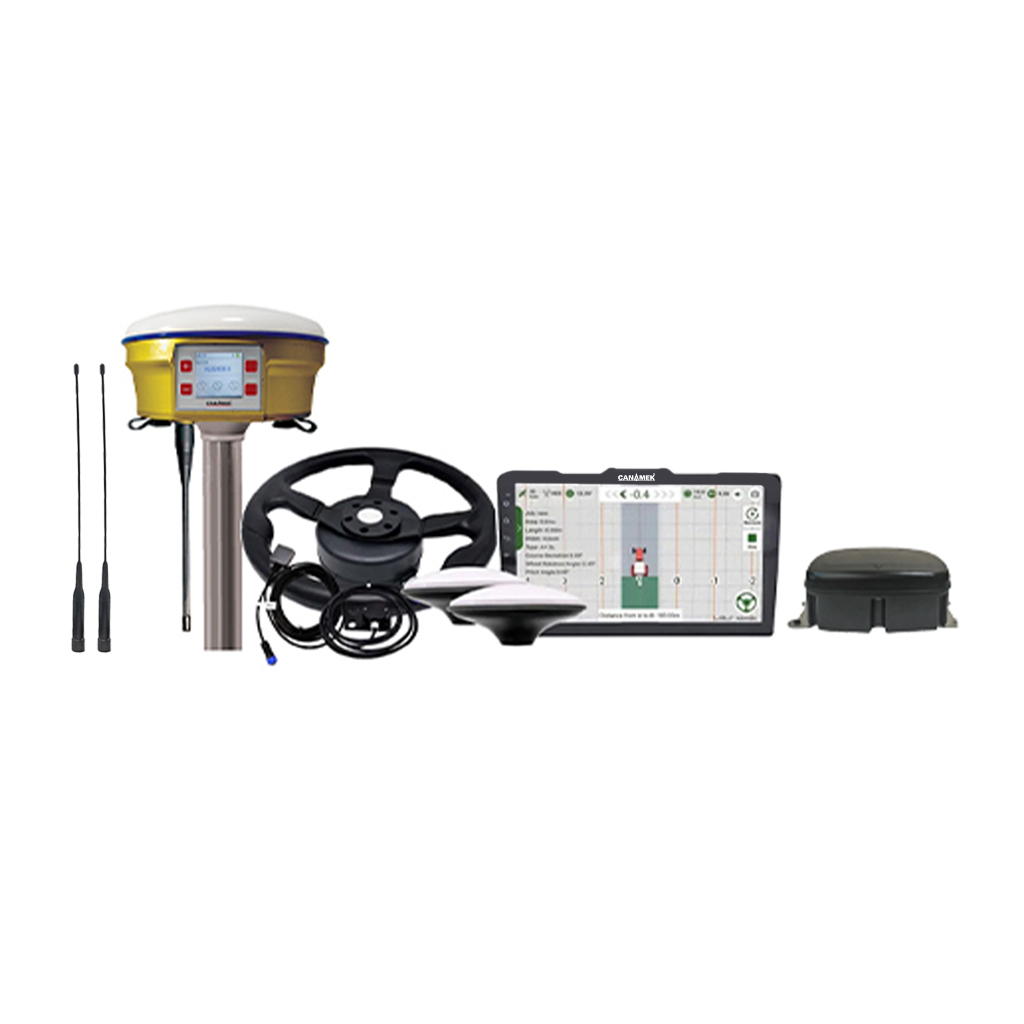
An auto steering system is a combination of electronic and mechanical components, including a GNSS receiver, display monitor, electronic control unit, steering motor or hydraulic steering system, and route management software. These components allow agricultural machinery to automatically follow predefined paths.
By receiving positioning information from satellites, the system continuously corrects the machine’s movement and prevents deviation during field operations. With RTK-enabled systems, positioning accuracy can reach approximately 2 to 3 centimeters, making them ideal for precision agricultural applications.
Increasing Agricultural Operation Accuracy
One of the most important advantages of an auto steering system is the ability to move machinery in perfectly straight and accurate lines across the field. This capability improves operations such as planting, spraying, fertilizing, tillage, and harvesting.
By eliminating human errors and reducing path deviations, farmers can achieve more uniform operations and improve overall crop quality.
Reducing Overlapping and Input Consumption
In traditional farming methods, some areas of the field may be processed multiple times, while other areas may remain untreated. Auto steering technology minimizes these problems by guiding machinery accurately throughout the field.
As a result, the consumption of seeds, fertilizers, pesticides, and fuel is reduced. Studies show that precision guidance technologies can reduce agricultural input consumption by approximately 5 to 15 percent.
Saving Time and Increasing Efficiency
Accurate machine guidance reduces unnecessary movements, correction stops, and overall operation time. Farmers can manage larger areas in less time while maintaining higher operational quality.
Reducing Operator Fatigue
Long hours of driving tractors along straight paths require continuous concentration and can cause severe operator fatigue. Auto steering systems perform the main steering tasks automatically, allowing the operator to focus on monitoring equipment performance and field conditions.
This improves working comfort, reduces human errors, and increases safety during agricultural operations.
Operation in Low Visibility Conditions
Auto steering systems do not depend on direct visual guidance from the operator. Using satellite positioning technology, they can maintain accurate performance during nighttime operations, fog, dust, or low-visibility conditions.
Increasing Crop Productivity
High operational accuracy ensures more uniform planting, fertilizer application, and crop management. This leads to healthier plant growth, better resource management, and ultimately higher crop yields.
Reducing Soil Compaction
By using predefined and repeatable traffic paths (Controlled Traffic Farming), machinery movement is limited to specific areas of the field. This reduces soil compaction, improves water infiltration, and supports healthier root development.
Increasing Long-Term Profitability
Although purchasing an auto steering system requires an initial investment, reduced fuel consumption, lower input costs, shorter operation times, and decreased labor expenses allow farmers to recover their investment quickly.
In many medium and large farms, this technology can pay for itself within one to three years.
Applications of Auto Steering Systems
Auto steering systems are used in various agricultural operations, including:
Crop planting
Precision spraying
Fertilizer application
Tillage and soil preparation
Harvesting operations
Land leveling
Agricultural machinery traffic management
Challenges and Limitations
Despite their many advantages, successful use of auto steering systems requires proper equipment selection, operator training, and regular maintenance. GNSS signal quality and environmental conditions may also affect system performance.
Choosing a reliable system with professional technical support plays an important role in achieving successful results.
Rassam GPS Auto Steering Solutions
Rassam GPS provides advanced GNSS-based auto steering solutions designed for precision agriculture. These systems offer high accuracy, easy installation, user-friendly operation, and compatibility with various agricultural machines, helping farmers perform their operations faster, more accurately, and more economically.
Conclusion
Auto steering systems are among the most important technologies in precision and smart agriculture. By improving operational accuracy, reducing costs, saving resources, and increasing productivity, these systems play a significant role in the future of modern farming.
With increasing production costs and limited natural resources, adopting Auto Steering technology can be an effective solution for improving profitability, reducing resource consumption, and supporting sustainable agriculture.