Using Land Leveling to Increase Water Productivity in Agriculture
Land leveling is an important agricultural practice that helps farmers increase water productivity in their crops. Using land-leveling equipment, fields can be made flatter and more uniform, which allows water to infiltrate and be absorbed more effectively. Higher water productivity can help reduce energy and chemical input costs and ultimately lead to greater profits for farmers. In this article, we examine the benefits of using land leveling in agriculture to improve water productivity and explain how farmers can apply it.
Benefits of Using Land Leveling for Water Conservation in Agriculture
Increased Water Productivity
By leveling the land, the field becomes smoother and more uniform, helping water infiltrate and be absorbed better and in greater amounts. This improved water productivity can reduce energy and chemical costs and result in higher profits for farmers.
Improved Crop Quality
As water productivity improves, crop quality improves as well. Crops grown with more efficient water use tend to be larger, fresher/juicier, and of higher quality.
Reduced Energy Costs
With higher water productivity, farmers need less energy for pumping water and operating other machinery. Lower energy costs help farmers reduce expenses and increase profits.
Reduced Chemical Input Costs
With improved water productivity, less chemical input is needed. This reduction in chemical use lowers costs for farmers and also helps protect the environment.
Land Leveling for Agriculture in Arid Regions
Land leveling can also be beneficial for farmers living in arid regions. In fact, in dry areas, water productivity is extremely important. Therefore, using land leveling to reduce water losses and increase water productivity can help farmers in these regions.
Land leveling in arid regions can be useful in two ways:
1. Improving water absorption: Dry soils with high permeability can cause water to percolate quickly into deeper layers, making it unavailable to plants. By leveling the land, the surface becomes smoother and more uniform, which helps water be absorbed more effectively.
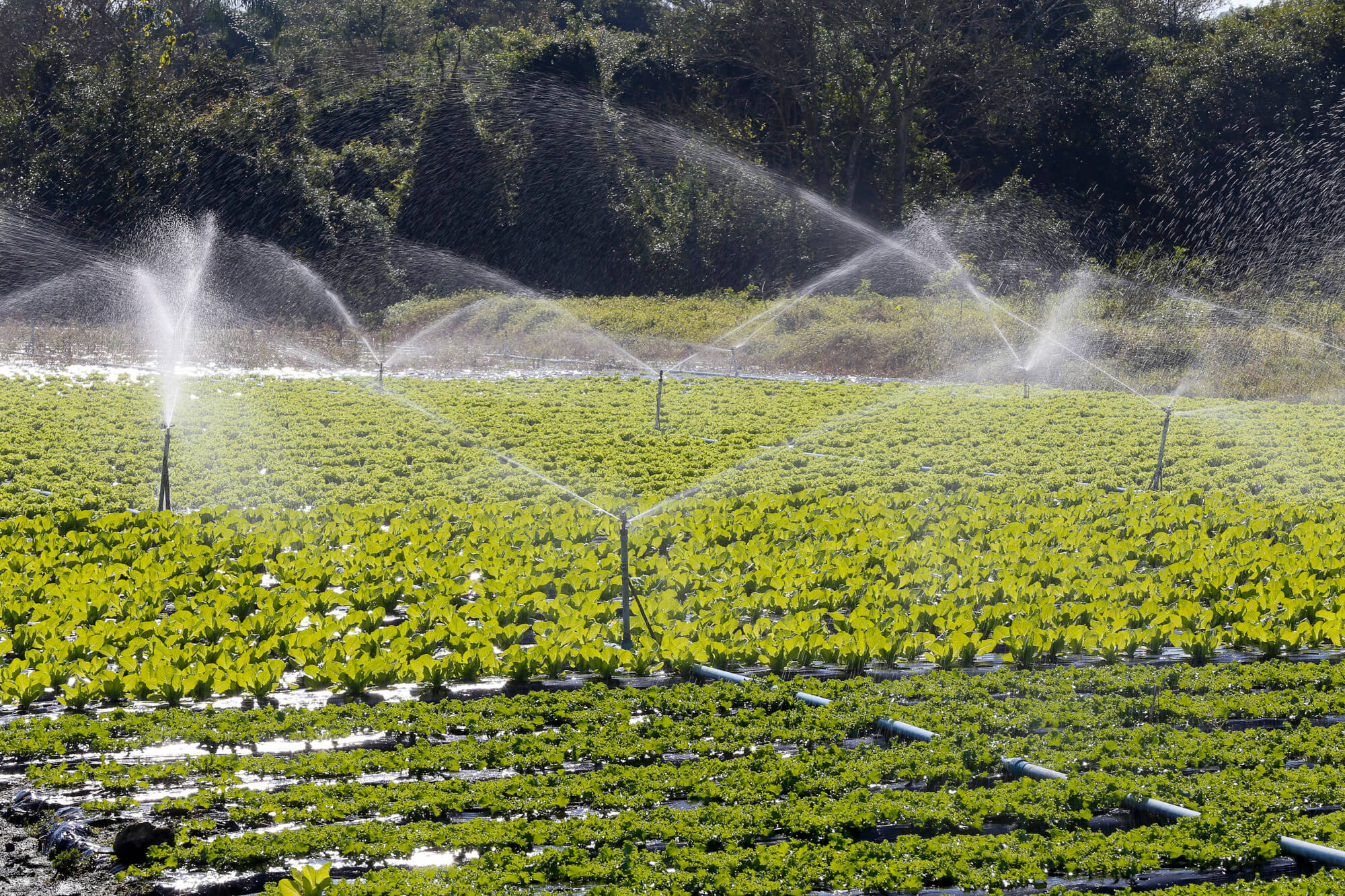
2. Delivering water more efficiently to plants: With land leveling, drip irrigation and sprinkler irrigation systems can be implemented more optimally across the field. This improves water delivery to plants and reduces water losses.
Therefore, land leveling can be highly important for farmers in dry regions. By using this method, farmers can increase water productivity and harvest higher-quality crops.
Land Leveling for Agriculture in Humid Regions
Land leveling is also beneficial for farmers living in humid regions. In these areas as well, leveling can help farmers increase water productivity and harvest higher-quality crops.
In humid regions, land leveling helps make the field flatter and more uniform. This allows water to infiltrate the soil more effectively and reduces water losses. In addition, land leveling helps prepare the land more effectively for cultivation. Fields with varying sizes and shapes in humid areas may receive moisture irregularly due to higher humidity and lower permeability. By using land leveling, the land becomes smoother and more uniform, which supports better cultivation.
Therefore, land leveling is also useful for farmers in humid regions. With this method, farmers can improve water productivity and harvest higher-quality crops.
Conclusion
Using land leveling in agriculture can help farmers increase water productivity and reduce costs. By applying different land leveling methods, farmers can properly smooth and grade their fields to achieve the best water productivity. As a result, farmers can harvest higher-quality crops and earn greater profits.