Electronic Planter: A Step Toward Precision Agriculture and Higher Productivity
In modern agriculture, planting accuracy plays a crucial role in determining the final performance of a farm. Irregular seed distribution, row overlap, and inconsistent spacing can lead to reduced yields and increased production costs. This is why smart technologies such as electronic planters have become one of the most important tools in precision agriculture.
What Is an Electronic Planter?
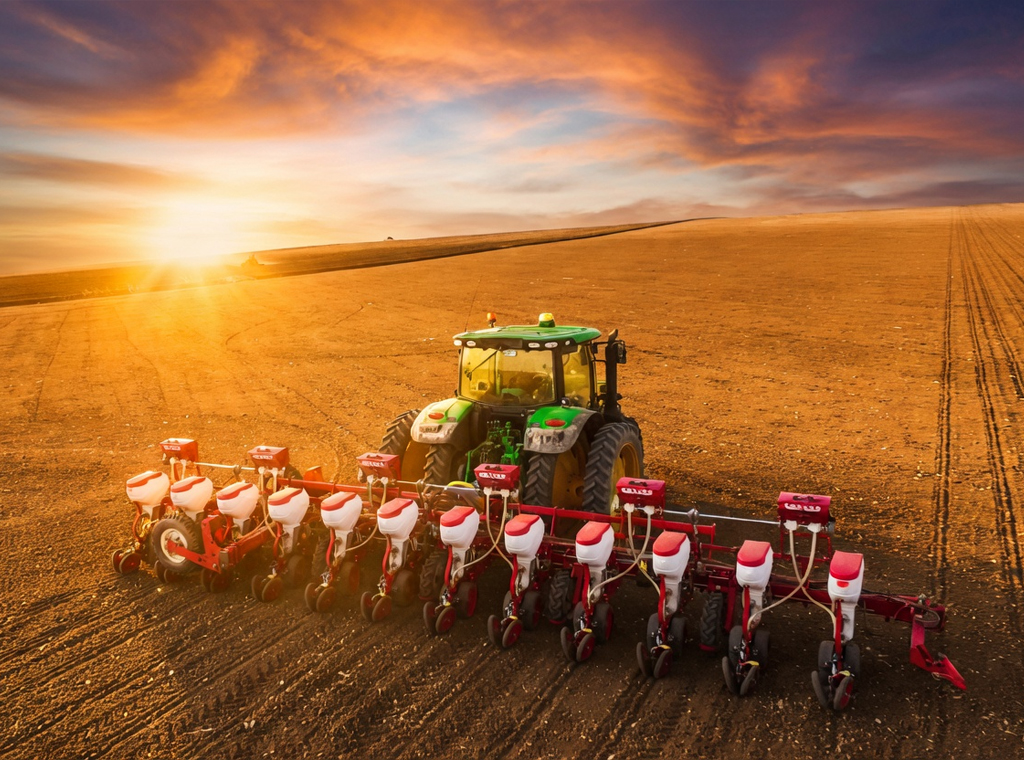
An electronic planter is an intelligent control system installed on seed drills and row planters to precisely manage seed rate, spacing, depth, and planting uniformity. The system can operate independently or be integrated with GPS technology and field maps, enabling planting operations to be performed with significantly greater accuracy than traditional methods.
The primary goal of this technology is to improve planting efficiency, reduce seed waste, and ensure uniform crop density across the entire field.
Main Components of an Electronic Planter
Central Control Unit (ECU or Cab Monitor)
This unit serves as the brain of the system, processing data received from sensors and issuing commands to control planting operations.
Seed Monitoring Sensors
These sensors track the passage of every seed and immediately alert the operator in the event of blockages, skips, or interruptions in seed flow.
Speed and Wheel Rotation Sensors
Machine speed is measured continuously, allowing the seeding rate to be automatically adjusted according to the planter’s operating speed.
Electric or Electromechanical Actuators
These components regulate seed flow and precisely control seeding rates, making it possible to adjust application rates during operation.
GPS and Field Map Integration
In advanced models, the system can connect to satellite receivers and automatically vary seeding rates across different field zones based on management maps and agronomic requirements.
Benefits of Using an Electronic Planter
Increased Planting Accuracy
Real-time seed monitoring ensures consistent seed spacing and uniform crop density throughout the field.
Reduced Seed Consumption
By preventing overlaps and unnecessary replanting, the system significantly reduces seed usage and input costs.
Higher Crop Yield
Uniform seed distribution promotes healthier crop growth and improves the efficient use of water, fertilizer, and sunlight.
Reduced Human Error
Many manual adjustments and monitoring tasks are automated, allowing the system to manage planting operations more effectively.
Precision Agriculture Capability
Integration with GPS and modern farm management technologies enables advanced precision farming practices and data-driven decision-making.
The Role of Electronic Planters in the Future of Agriculture
Agriculture is rapidly moving toward data-driven management and smart farming technologies. Electronic planters provide precise control over planting operations and are becoming one of the most effective tools for increasing productivity while reducing production costs.
The adoption of this technology not only helps save valuable inputs but also creates opportunities for higher yields, improved efficiency, and greater farm profitability.
Rassam GPS: Supporting Modern Agriculture
Rassam GPS provides advanced precision agriculture solutions, including electronic planter systems designed to improve planting accuracy and operational efficiency. Equipped with GPS connectivity, intelligent seed control, and professional technical support, these solutions help farmers confidently transition toward modern, technology-driven agriculture.
The future of farming is built on precision, data, and technology—and electronic planters are among the key tools making that future possible.