# What Are the Advantages of Laser Land Leveling in Agriculture?
Laser land leveling is a modern and advanced technology used in agriculture and construction to create a highly uniform and precise land surface. By utilizing laser-guided equipment, this method improves land grading accuracy, optimizes water distribution, enhances crop performance, and increases overall operational efficiency.
In addition, laser land leveling contributes to environmental sustainability by reducing water and energy consumption during land preparation. It can also minimize the use of chemicals and help reduce air and water pollution. In this article, Rassam GPS explores the advantages of laser land leveling and the accuracy it offers for modern agricultural operations.
## Benefits of Laser Land Leveling in Agriculture and Livestock Farming
The use of laser-guided leveling systems ensures highly accurate correction of uneven terrain, providing numerous benefits for farmers and agricultural enterprises.
### Increased Crop Productivity
A smooth and level field allows water to infiltrate and be absorbed more efficiently, maintaining consistent soil moisture. This promotes uniform crop growth, reduces drought-related stress, and ultimately improves both crop yield and quality.
### Water Conservation
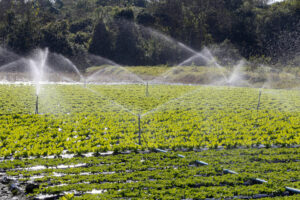
One of the most significant advantages of laser land leveling is water savings. A level surface ensures uniform water distribution across the field, eliminating low spots and irregular elevations where water may accumulate or be wasted through runoff. Efficient water use not only conserves resources but also reduces irrigation costs.
### Reduced Soil Erosion
Water flows more rapidly on sloped land, increasing the risk of soil erosion. Laser leveling minimizes uneven slopes and significantly reduces erosion. This helps preserve valuable topsoil, prevents nutrient loss, and supports long-term soil health.
### Time Savings and Higher Operational Efficiency
Laser technology enables precise grading without the need for extensive manual surveying and slope measurements. Since grading is one of the most time-consuming aspects of land preparation, laser systems significantly reduce project completion times while improving grading accuracy.
### Improved Efficiency of Agricultural Machinery
Farm machinery performs more efficiently on level surfaces. Equipment experiences smoother operation, reduced fuel consumption, lower wear and tear, and fewer mechanical failures. These benefits indirectly reduce operational costs and improve overall productivity.
### Enhanced Construction Quality
Land leveling is not limited to agricultural applications. It is also widely used in construction projects to prepare stable foundations. Laser land leveling improves the quality and durability of infrastructure while minimizing future structural problems.
### Improved Livestock Management Conditions
Laser leveling can also benefit livestock operations by creating smoother terrain with fewer slopes and irregularities. This improves accessibility, drainage, and overall management conditions for livestock facilities.
## Improving Land Conditions Through Laser Leveling
The use of laser land leveling can significantly enhance soil and field conditions. Precise grading improves soil structure, reduces compaction-related problems, and decreases waterlogging by improving infiltration rates.
Optimized field conditions allow more accurate field management and increase the efficiency of agricultural machinery. As a result, farmers can reduce production costs, improve soil quality, and make more efficient use of limited water and land resources.
Additionally, reduced reliance on excessive tractor operations and heavy machinery can lower maintenance costs and extend equipment lifespan. Overall, laser leveling contributes to both higher agricultural productivity and long-term soil conservation.
Impact of Laser Land Leveling on Soil Quality and Crop Performance
Laser land leveling positively affects both soil quality and crop production. Improved field conditions reduce waterlogging and enhance soil permeability, which decreases irrigation requirements and associated costs.
Better soil conditions also lead to improved crop growth and lower production expenses, increasing farm profitability.
### Improved Root Development
Laser leveling promotes better soil structure, enabling stronger root systems and improved nutrient uptake. Plants can access water and nutrients more efficiently, resulting in healthier growth and higher yields.
### Reduced Nutrient Loss
By minimizing waterlogging and uneven water distribution, laser leveling reduces nutrient leaching and soil degradation. This helps maintain soil fertility and improves crop quality and shelf life.
### Increased Farm Profitability
More precise land leveling leads to better crop performance and higher-quality harvests. Farmers benefit from increased product value, improved yields, and lower production costs.
### Improved Soil Health
Laser leveling allows better management of soil conditions and helps reduce contamination issues. Improved soil health contributes directly to higher-quality agricultural products and long-term sustainability.
Overall, laser land leveling is an advanced and highly effective technology that improves soil quality, enhances crop productivity, increases profitability, and supports sustainable farming practices.
## Accuracy of Laser Land Leveling
Accuracy and precision are the key factors that make laser land leveling highly effective. Advanced laser technology provides precise measurements and automatic adjustments, ensuring superior grading results.
### Precise Elevation Measurement
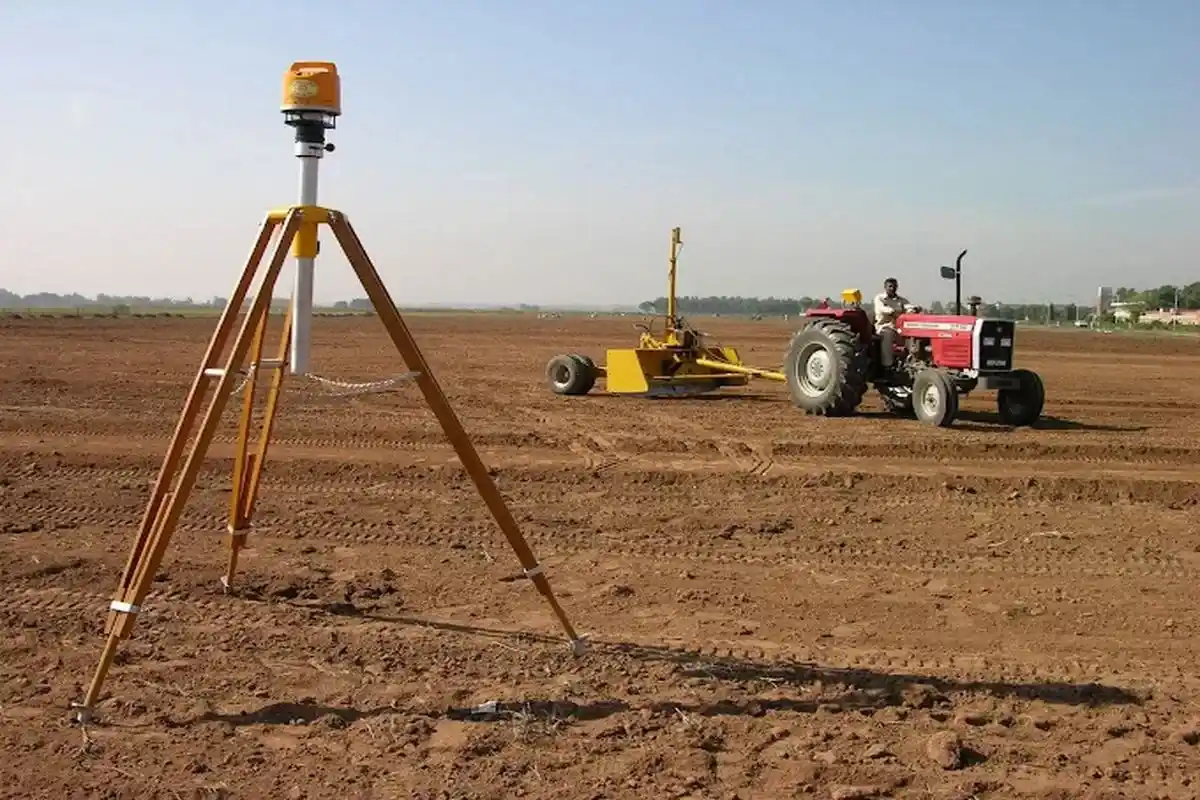
Laser leveling systems rely on highly accurate elevation measurements. Laser transmitters project reference beams across the field, while receivers mounted on grading equipment detect these signals and determine precise ground elevations.
This accuracy allows the system to automatically adjust blade or bucket heights according to the desired field slope.
### Uniform Land Surface
The high precision of laser-guided grading ensures consistent leveling across the entire field. This eliminates uneven areas where water might accumulate and supports efficient irrigation and uniform crop growth.
A consistent field slope also improves water distribution and nutrient availability, reducing waste while maximizing productivity.
### Minimizing Surface Irregularities
Traditional leveling methods often struggle to eliminate all high and low spots due to limited measurement accuracy. Laser technology enables precise excavation and filling operations, resulting in a smoother and more uniform surface.
### Reduced Human Error
Conventional grading often depends on operator judgment, which can introduce inconsistencies. Laser systems automate measurements and adjustments, significantly reducing human error and improving grading quality.
### Efficient Use of Time and Resources
The precision offered by laser technology minimizes the need for rework and corrective grading. As a result, projects are completed more quickly, resources are used more efficiently, and operational costs are reduced.
## Conclusion
Laser land leveling is one of the most effective methods for creating a uniform land surface. By using laser-guided measurements, it enables highly accurate grading with minimal error and exceptional consistency.
The most important advantages of laser land leveling include reduced agricultural costs, increased productivity, improved irrigation management, enhanced soil quality, and better utilization of natural resources.
The accuracy and reliability of laser leveling technology make it significantly more valuable than traditional leveling methods, providing farmers and contractors with a powerful tool for achieving precise land preparation and maximizing operational efficiency.
## Rassam GPS specializes in agricultural electronics, machine automation systems, satellite-guided land leveling, and laser land leveling technologies. By providing high-quality equipment and innovative solutions, Rassam GPS helps farmers and contractors improve productivity, reduce costs, and achieve superior land management results.