Technology Solutions for Feeding the World’s Population
According to forecasts, the world’s population will reach 9.7 billion by 2050, and for this reason agriculture must become more productive and more sustainable. Applying technology in agriculture can help transform the global food production system and reduce its impact on the climate and the environment. Digital farming systems can also be used to reduce food loss and waste at every stage of the food supply chain.
The explosive growth of the world’s population over the past 200 years—from 1 billion to 7.7 billion**—has been driven by major technological advances and new agricultural technologies. As a result, agriculture in its modern form is testing the limits of humanity’s environmental resources.
New research shows that about **23% of greenhouse gases are produced by agriculture, and agriculture consumes 92% of the world’s freshwater. Forty percent of the food produced globally is never eaten and is wasted. China alone wastes 35 million tons of grain every year. If the world’s population is expected to increase by 2 billion by 2050, agriculture must find solutions to feed the world’s population and operate as efficiently as possible.
Transforming Agriculture Through Technology
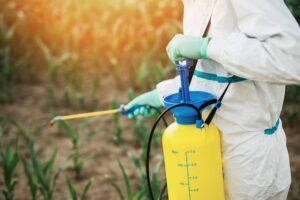
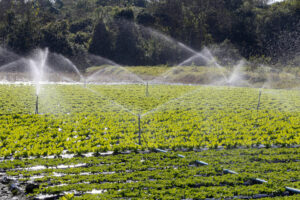
Human ingenuity, scientific progress, and technological advances have provided the world with an unprecedented set of tools to transform the food system and reduce its impact on nature and the climate. Technology in precision agriculture helps farmers with real-time weather forecasting so they can make highly accurate day-to-day decisions about when and how much to irrigate, fertilize, and apply pesticides.
Ultra-high-resolution imaging can detect early signs of disease, water stress, and soil degradation, while drones spray fertilizer, pesticides, and water with pinpoint accuracy. By reducing guesswork in farming, smart agriculture enables crops to reach their full genetic potential without excessive use of chemical inputs. Biotechnology is another field that continues to advance. Breakthroughs in seed science make crops more resistant to drought, pests, and pollution, increase agricultural productivity, and improve the resilience of food producers to environmental shocks.
Tackling Food Waste
If the world does not address food loss and waste, increasing the ability to produce more food using fewer resources will have only a limited impact. Food is lost and wasted at every stage of the supply chain—from harvesting to storage to transportation—and finally at the retail and consumer end. Here again, technology can play an important role.
Using technology in agriculture and digitizing the sector improves the overall efficiency of the agri-food system. Online marketplaces connect farmers directly with consumers and reduce the number of intermediaries and transit points that food must pass through. This not only increases farmers’ income by eliminating middlemen, but also reduces transport time and lowers spoilage and waste.
Reducing these losses requires reengineering the logistics system that moves food from farms to dinner tables. Garlic sold by farmers in Henan to consumers in Shanghai through online platforms travels 16.1% less distance and uses 38.1% less fuel per ton. It also helps reduce food loss and waste by up to 25% of production, compared with the global average of around 40%.
China is also taking steps to curb food waste at the national level. Last year, in April, Chinese lawmakers voted to pass an anti–food waste law. Under this law, catering service providers can impose charges on customers who leave excessive amounts of food waste.
Digital Transformation in Agriculture
Agriculture, as a major foundational sector that employs millions of people directly and throughout the food supply chain, has lagged behind many other sectors in digitization and the use of digital technology. However, fortunately it is not too late—this sector simply needs more investment, more new ideas, and greater collaboration to embed technology into agriculture and drive digitization.
Summary
With the responsibility of feeding the world’s growing population, agriculture is at one of its most critical points. It is better for all of us to help agriculture and the global food production system evolve so they can supply the food we need in a sustainable way. Rassam GPS is a pioneer in industrial agriculture, satellite land leveling, laser land leveling, and the sale of industrial agricultural equipment.